Root Canal-Treated Teeth and Devitalised Teeth in Madrid
A root canal-treated tooth is a dead tooth that remains in your body. From a biological dentistry perspective, we assess each case and offer safe alternatives to eliminate toxic foci and restore your health.
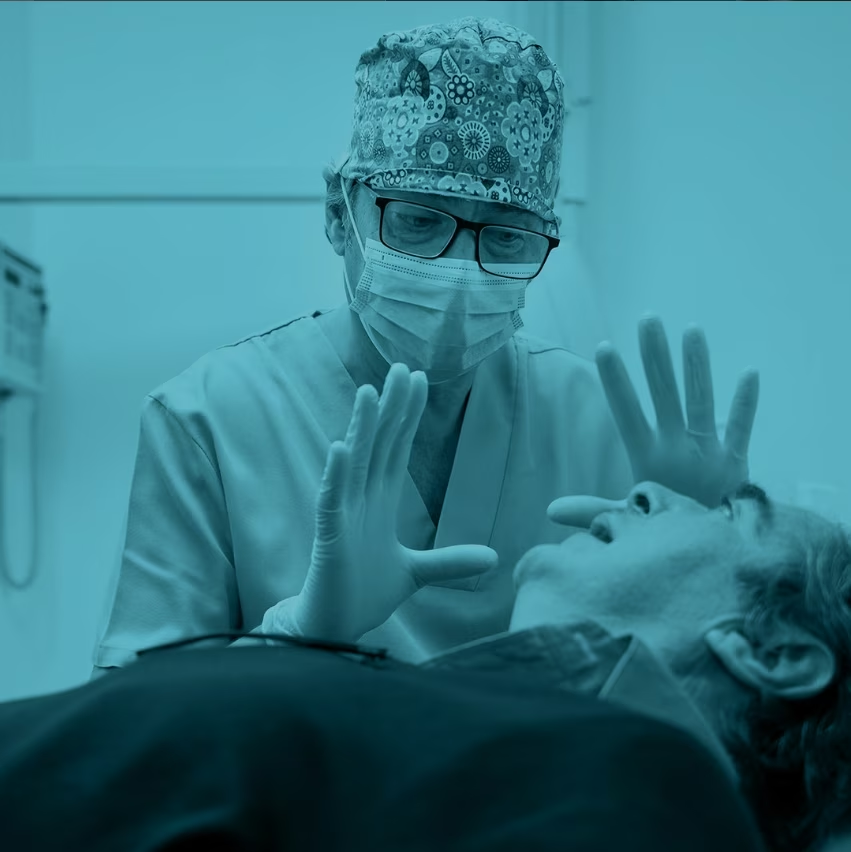
A root canal-treated tooth is a dead tooth
Root canal treatment is one of the most common procedures in conventional dentistry: the nerve of a damaged tooth is removed, the canals are filled with a sealing material and the tooth is kept in the mouth. But from the perspective of biological dentistry, there is a truth that is rarely addressed: a root canal-treated tooth is always associated with a sick person.
Root canal-treated teeth are dead teeth that remain as a pillar within the oral cavity. Having lost their nerve and blood supply, the immune system can no longer access the interior of the tooth. The residual organic tissue decomposes and progressively emits harmful metabolites — toxins — that have the capacity to cause a wide range of systemic or organ diseases.
Although the main canals are sealed during root canal treatment, each tooth has thousands of dentinal tubules — lateral micro-channels barely a few microns in diameter — that are impossible to clean or seal completely. Organic tissue remains trapped in these tubules and, receiving neither oxygen nor blood, decomposes to create an ideal environment for pathogenic bacteria.
Pathogenic bacteria, thioether and methanethiol
Anaerobic bacteria — microorganisms that thrive in the absence of oxygen — colonise the dentinal tubules of devitalised teeth. These pathogenic bacteria use the amino acids cysteine and methionine to produce highly toxic and potentially carcinogenic hydrogen sulphide bonds: thioether and methanethiol, by-products of anaerobic metabolism.
These toxins do not remain confined within the tooth. They can migrate through the maxillary bone and reach the bloodstream, spreading throughout the entire body and potentially causing various systemic and organ diseases.
The relationship between devitalised teeth and systemic disease is a field that biological dentistry has been studying for decades. Chronic infectious foci in the mouth — silent and invisible on a conventional X-ray — contribute to a permanent toxic and inflammatory burden that the immune system must fight continuously.
Our alternative: extraction, disinfection and rehabilitation
When a root canal-treated tooth is identified as an infectious or toxic focus, the alternative from a biological dentistry perspective is a complete protocol in three phases:
Careful extraction: removing the tooth and performing a thorough curettage of the socket to eliminate all inflammatory or infected tissue (cavitational cleaning).
Disinfection with ozone therapy: application of medical ozone (O₃) in the socket to eliminate residual bacteria, accelerate healing and modulate the local immune response.
Rehabilitation with a ceramic implant: once the bone has healed, placement of a zirconia implant — 100% ceramic, metal-free, with total biocompatibility verified by a prior MELISA Test.
This protocol allows us to eliminate the toxic focus and restore masticatory and aesthetic function with a material that does not interfere with the body's biology.
Frequently asked questions
We answer your questions
A root canal-treated tooth is a tooth from which the nerve and blood supply have been removed. Without blood flow, the immune system cannot access the interior of the tooth. It is, literally, a dead organ implanted in a living body.
Root canal-treated teeth are dead teeth that remain as a pillar within the oral cavity. The residual organic tissue decomposes and progressively emits harmful metabolites — toxins — that have the capacity to cause a wide range of systemic or organ diseases.
The pathogenic bacteria that colonise devitalised teeth use the amino acids cysteine and methionine to produce highly toxic and potentially carcinogenic hydrogen sulphide bonds — thioether and methanethiol — as by-products of anaerobic metabolism.
A root canal-treated tooth always carries a potential risk. Although many remain apparently stable for years, the residual organic tissue progressively decomposes and emits toxins. From a biological dentistry perspective, we always recommend assessment and, in most cases, extraction of root canal-treated teeth.
The alternative is careful extraction of the tooth, followed by curettage of the socket to remove all infected tissue, disinfection with ozone therapy and, once the bone has healed, rehabilitation with a 100% ceramic, biocompatible zirconia implant.
35 years of experience in biological dentistry. Dr. Alejandro Castillo, a physician from the Complutense University of Madrid, trained in Paris. Complete protocol with ozone therapy, zirconia implants and personalised supplementation. Two clinics in Madrid.
Related articles
Explore biological dentistry and dental health in depth
Root canal treatments and devitalised teeth: what you should know
What happens inside a root canal-treated tooth? Toxins, anaerobic bacteria and their link to systemic diseases.
The connection between oral health and systemic diseases
The mouth as a mirror of the body: how dental infectious foci affect the entire organism.
Do you have root canal-treated teeth and want an assessment?
Book an appointment for a no-obligation assessment. We will analyse your case from a biological dentistry perspective and explain the available options.